

Today I’m posing this question to you, the reader, but also to myself as a busy Marketer. In an industry becoming more and more dependent on AI tools like ChatGPT, I see my peers posting content that’s clearly been written by something other than the human brain. No shade here. I get the pressures of the business and that urge to cut corners. For me, there’s still something soulless and cheesy about ChatGPT’s turn of phrase. That and the rocket ship emoji it loves to insert everywhere are dead giveaways that ChatGPT is in the mix.
As the Owner of a digital marketing agency, do I use ChatGPT on a regular basis? Absolutely. When researching topics for accuracy, it cuts through the noise far more quickly than a Google search. I have a responsibility to my clients to be a subject matter expert with regards to their respective industries and will use every tool at my disposal to do so. When utilized properly, ChatGPT is an excellent learning tool. But what happens, long-term, when you use it for more than mere research?
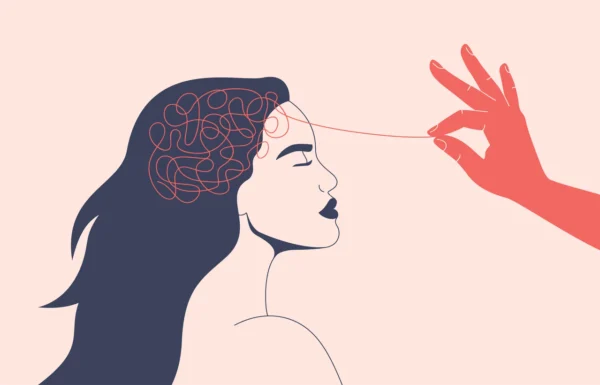
This was a question posed in a recent article in The NY Post entitled “ChatGPT is getting smarter, but excessive use could destroy our brains, study warns”. Author Ben Cost details an MIT study that seemed to indicate reduced neural, linguistic, & scoring capabilities in study participants who utilized ChatGPT vs. participants who relied on their brain to write essays.
The late, great American astronomer, astrophysicist, and author Carl Sagan had a rather bleak, almost dramatic, view on technology. Two quotes communicating these views include:
“We live in a society exquisitely dependent on science and technology, in which hardly anyone knows anything about science and technology.”
“This combustible mixture of ignorance and power, sooner or later, is going to blow up in our faces.”
He wasn’t positing that technology itself is particularly evil or dangerous, he was merely warning against the cavalier and uninformed use of it. Pay attention, use care, and don’t be duped by something you don’t quite understand.
AI isn’t just about information; it’s gotten into the image and video realm as well. I recently had no less that 4 people text me this rather funny AI video of dogs supposedly competing in a diving competition at the summer Olympics.
After some text exchange about how realistic AI has gotten, it came to my attention that all four of these individuals assumed the video was real. These are all grown adults, a variety of ages and backgrounds, residing in different states, with one thing in common: When faced with a video of a seemingly impossible, or at least highly improbable event, they didn’t hesitate to believe their eyes or even pause to question what they were seeing.
Let’s take it easy on my friends. I guarantee there are a lot more Americans out their sharing this video and 100% believing it’s real as well. Who wouldn’t love to watch canine Olympics? Sign me up.
In summation, while I think it’s fine to use AI as part of your working arsenal, let’s be mindful not to become too dependent on it that we lose ourselves and the ability that makes us uniquely human: Creativity.
